The conversation about Artificial Intelligence in UK accountancy has rarely been louder.
The sheer scale of AI-led discussions at this year’s Finance, Accounting and Bookkeeping (FAB) Show was further evidence of this meteoric rise in interest and thirst for knowledge.
But, in an increasingly saturated field, how many accountancy practices are taking the AI conversation in a different direction, and are doing so responsibly?
HB&O, which has offices in Birmingham, Coventry and Leamington Spa, has set up an AI steering group in an effort to tick both of these boxes.
Led by tech-savvy Khari George, the group is developing tools – in close accordance with Governance AI – that are both visionary, in their potential benefits to the business and its clients, and ethical.
These tools aim to produce faster management reporting, improved forecasting and better data insights whilst reducing admin to free up more time for strategic advice.
The company also wants its bespoke use of AI to deliver stronger fraud detection and anomaly spotting and drive efficiencies with onboarding and document workflows.
Khari said: “AI isn’t actually new to our industry. It has existed within accountancy in some form for a long time. What has changed is the scale of it and, more importantly, the opportunity for firms like ours to harness it.
“Rather than rushing to deploy off-the-shelf solutions, we’re investing time in understanding, structure and awareness.”
This groundwork is being done in partnership with Governance AI, a specialist consultancy that works to underpin the firm’s internal policy, strategy and review frameworks.
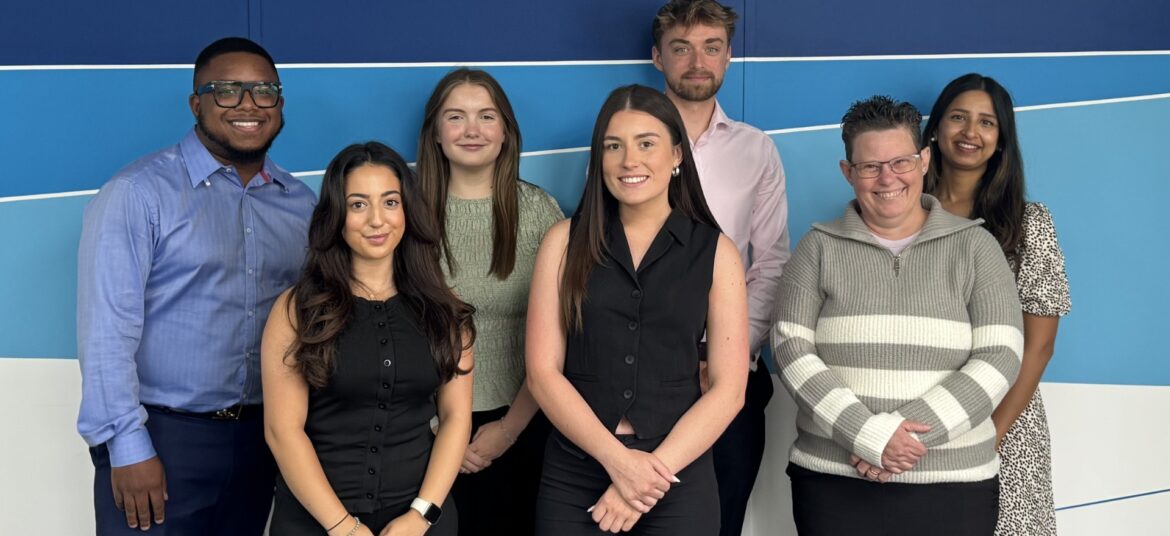
The makeup of the steering group has been deliberately configured to include representation from across the firm.
Khari added: “AI is too large a topic for it to sit with a few individuals. There needs to be board-level oversight, a robust strategy and a policy to ensure security and efficiency.
“And there needs to be clear, effective communication across the whole firm. We have prioritised that work over jumping in head-first. I think that is what makes our approach distinctive.”
The group meets to discuss a wealth of new tech matters and to run through AI usage reports from each department in the business before making recommendations to the Board. The recommendations are then backed up by regular reviews to ensure HB&O understands what each department is using the technology for and how it has performed.
HB&O is also setting in motion plans for a training process that will see the latest information and guidance cascaded throughout the business to ensure that all departments, whether tax, payroll, audit or VFO, are up to speed.
The objective is to bring everyone in the business up to a certain level of understanding so they are able to negotiate strategic conversations.
“We see this as a genuine opportunity to be more connected as an organisation,” Khari said. “AI is part of how we build that internal connection. The work isn’t owned by a few. It is a firm-wide effort.”
The accountancy software space is becoming saturated, with new AI products launching almost weekly. The risk for any practice, therefore, is to mistake activity for progress.
Khari added: “There’s so much noise, and almost everyone is promising the same thing. For us, the more important conversation is internal. ‘Where can we apply intimate knowledge of our clients’ processes’?
“’Where can we build something better than what’s on the market?’ For the first time, AI puts us in the driving seat from a software perspective.
“Previously, we were limited by whatever tools existed. Now we can use AI to build solutions that genuinely empower our clients’ activities.”
HB&O has developed internal agents to review work and produce handover files between departments. The agents can alert a junior staff member when to get more senior help or reach out to another department, boosting HB&O’s ability to support its clients with a more connected experience.
AI is positioned to give HB&O greater insight on all of its core functions and its entire client portfolio, which spans businesses that still work with paper-based systems through to those running fully digital operations.
The value of that, Khari says, is not necessarily measured in faster numbers or lower fees.
He said: “Configuring long-term solutions specifically to a client’s business frees us to focus on accurate, high-quality accounting information, and lets us devote more time and attention to the areas where clients truly value our input. That is the shift we want to see.”
Khari believes that, contrary to public perception, the role of skilled professionals will actually become more important as AI capability grows.
“AI has no capacity to review itself,” he said. “That makes the expertise of qualified professionals essential, not just for reviewing AI output, but for shaping how the tools are designed in the first place.
“Experts have to be involved at the start, not just at the end. And the tools themselves need consistent, ongoing review.”
For HB&O, AI adoption is not a race. It’s about adopting new technology responsibly, transparently and in a way that delivers the best possible service for clients.
Khari added: “We have a diverse portfolio of clients with very different needs. Our job is to make sure each one gets a bespoke, custom experience.
“AI gives us a bigger opportunity than ever to bridge gaps and tailor what we do for our clients. That is the goal, and what the structure we are building is designed to deliver.”
For more information about HB&O and its services, visit www.hboltd.co.uk